2025 Summer School in Biodiversity Modelling

The 2025 edition Summer School in Biodiversity Modelling will be on the theme “Coding biodiversity: building scenarios with a global ecosystem model“. This year hosted at the University of British Columbia in Vancouver, BC, the School will provide an opportunity to further your knowledge of Biodiversity Modelling, in an informal and friendly atmosphere.

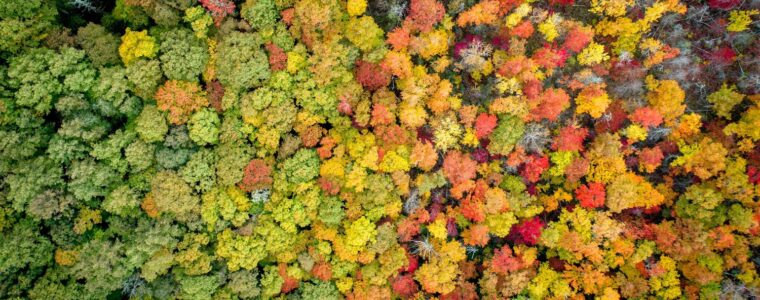
Photo by Darren Tierney on Unsplash

It has been proposed that general ecosystem models could inform policy decisions and improve our understanding of biodiversity and its functioning. Developing such models is however a daunting task that could only be achieved in team. The general objective of this edition of the Summer School in biodiversity modelling will be to investigate the joint effects of biodiversity changes and climate change on ecosystem functioning using a custom version of the Madingley model. Students will learn how to collaborate in a complex coding problem with an inter-disciplinary team, and we encourage people with diverse backgrounds to apply and compose these inter-disciplinary teams.

Prerequisites

For all applicants:

  • Minimum intermediate proficiency level in English; proficiency in French is an asset (listening and speaking)
  • Eligible to study in Canada (i.e., have the appropriate visa or be exempt from this requirement to enrol on a University course)

For applicants focused on developing biodiversity models:

  • Basic knowledge of biodiversity modelling
  • Upper-intermediate level of knowledge in scientific programming (the program will have a focus on R language, but you can use the language of your choice)
  • Familiarity with version control systems (we’ll provide advanced training)

For applicants focused on communicating biodiversity models:

  • Familiarity with biodiversity topics
  • Skills in data visualization, and/or communication and outreach in different media
Date: August 18 to 22, 2025
Location: University of British Columbia, Vancouver - BC
Registration fee: 600$ (without accommodation) or 950$ (with accommodation)
Price includes course registration and meals. Members of certain programs or associations may be eligible for financial assistance to attend the event.

Registration

Anyone interested in taking part in the summer school must complete this form by June 15, 2025. Official registration (admission and payment of registration fees) will take place during the week of June 30, 2025.

More information and registration: https://www.usherbrooke.ca/ecoles-de-pointe/en/biology/2025-biodiversity-modelling

2025 Summer School in Advanced Statistics for the Life Sciences

It’s that time of the year again! Registrations are open for our 2025 Summer School in Advanced Statistics for the Life Sciences, this year with the theme “Hierarchical Models for the Life Sciences”. From May 5th to May 9th, 2025, we’ll meet at the beautiful Jouvence resort in Orford, QC, to learn from Guillaume Blanchet, Ph.D, and Andrew MacDonald, Ph.D, about hierarchical models with and without constraints (e.g. spatial and/or time) as well as multivariate hierarchical models.

Participants are invited to bring their own datasets, and they should have R installed in their computers, an intermediate level of knowledge in statistics and scientific programming.

Anyone interested in taking part in the summer school must complete this form by March 30, 2025.

More information on the University of Sherbrooke website.

2024 Summer School in Advanced Statistics for the Life Sciences

The Summer School in Advanced Statistics for the Life Sciences, on the theme of Hierarchical Models, will take place from April 29 to May 3, 2024 at Jouvence, in Mont-Orford National Park, Quebec. Hierarchical models in life sciences refer to statistical frameworks that account for the nested structure of data often encountered in biological research, where observations are organized within multiple levels of hierarchy such as individuals within populations, or repeated measures within individuals. These models allow for the incorporation of both within-group and between-group variability, providing insights into the underlying biological processes while appropriately addressing the complex dependencies within the data.

The intensive course is presented by Pr. Guillaume Blanchet, professor at Université de Sherbrooke and academic member of BIOS2, and Dr. Andrew MacDonald, research professional for BIOS2CREUS, and QCSB. The course aims to introduce hierarchical models from both a theoretical and practical point of view. Everything will be done using R with an introduction to Stan. Bring your dataset!

Registration

Anyone interested in taking part in the summer school must complete this form by March 20, 2024. Official registration (admission and payment of registration fees) will take place during the week of March 25, 2024

More information and registration: https://www.usherbrooke.ca/ecoles-de-pointe/en/biology/2024-hierarchical-models-life-sciences

2024 Summer School in Biodiversity Modelling

The 2024 edition Summer School in Biodiversity Modelling will be on the theme “Indicators to monitor biodiversity changes“. Biodiversity indicators are metrics used to measure and assess the health, diversity, and distribution of species, ecosystems, and genetic variability within an environment. These indicators provide valuable insights into the status and trends of biodiversity over time, helping to inform conservation efforts, policy-making, and sustainable development practices. By tracking these indicators, scientists and policymakers can monitor changes in biodiversity, identify areas of concern, prioritize conservation actions, and evaluate the effectiveness of conservation strategies.

The main objective of the 2024 Summer School in Computational Biodiversity Science will be to develop a report of the current state of biodiversity for Canada, based on the most recent science on biodiversity indicators and using state-of-the-art technologies in data science. 

Presented by Professor Dominique Gravel (Université de Sherbrooke) in collaboration with various leading scientists in the domain, the intensive course will take place from May 13 to 17, 2024 at Jouvence, in Mont-Orford National Park, Quebec.

Date: May 13 to 17, 2024
Location: Jouvence Resort in Orford, Quebec
Registration fee: 600$ (shared room) 800$ (private room)
Price includes course registration, accommodation and meals.

Registration

Anyone interested in taking part in the summer school must complete this form by March 20, 2024. Official registration (admission and payment of registration fees) will take place during the week of March 25, 2024

More information and registration: https://www.usherbrooke.ca/ecoles-de-pointe/en/biology/2024-biodiversity-modelling

Introductory workshop to Python

The BIOS² training program offers an Introductory workshop to Python for R users. The workshop will be presented on May 15 and 16, 2023 by Vincent Beauregard, data specialist at Biodiversité Québec.

The course aims to provide the basics of Python and to familiarize participants with the tools and libraries relevant to computational ecology. Sessions will build on participants’ prior knowledge of the R language to facilitate learning. Topics will include data manipulation with Pandas, data visualization with Matplotlib, and data analysis with Numpy and Scipy. Students will also learn how to break their code into functions and work with classes in Python.

The workshop is offered in preparation for the Advanced Field School in Computational Ecology, but is open to all members of the BIOS2 program and any other interested individuals.

Instructor

Vincent Beauregard is a technical coordinator, and a specialist in infrastructure, biodiversity data interfaces and spatial data from remote sensing at Biodiversité Québec. He is interested in the automation of data processing schemes.

What: Introductory workshop to Python
When: May 15 and 16, 2023 @ 1 pm – 4 pm (your time here)
Where: Online and at Université Laval
Language: English (bilingual Q&A and discussion)
Fees: free – offered only for participants of the Advanced Field School in Computational Ecology.
Registration deadline: May 11, 2023
Registration link: https://forms.office.com/r/kWvCrdpbus

Summer school in Biodiversity Modelling 2022

The 2022 edition of the summer school, which will take place from August 22 to 26, 2022 at the Centre de Villégiature Jouvence in Orford, will be on the theme: Biodiversity changes and data visualization. The course will take the form of a workshop during which the students, in collaboration with local organizations involved in biodiversity monitoring, will develop a web platform for visualizing biodiversity changes.